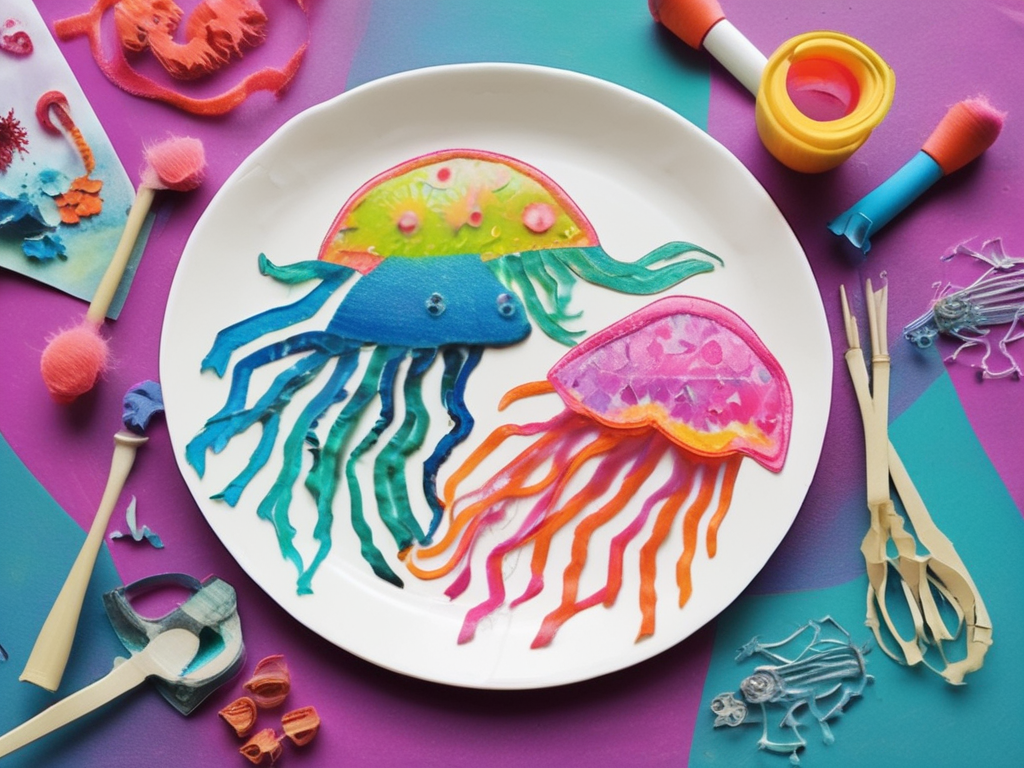
Exploring Ocean Animals through Arts and Crafts
I have a couple of aqua scholars in my home. They are obsessed with all things sea creatures! Honestly, I can’t blame them. The ocean is a vast, mysterious world teeming with all kinds of fascinating creatures. Introducing children to ocean animals through arts and crafts is a fun and educational way to spark and nurture their curiosity about marine life. In this blog, we’ll explore how to create some popular ocean animals using simple materials, engaging kids in both creative and learning activities.
1. Paper Plate Jellyfish
Materials:
- Paper plates
- Paints and paintbrushes
- Crepe paper or ribbons (various colors)
- Glue
- Scissors
- Googly eyes (optional)
Instructions:
- Paint the Paper Plate: Let the children paint the bottom side of the paper plate in bright colors. Encourage them to be creative with patterns and designs.
- Attach the Tentacles: Once the paint is dry, cut strips of crepe paper or ribbons and glue them to the edge of the paper plate to create the jellyfish’s tentacles.
- Add the Eyes: Glue googly eyes or draw eyes on the top of the paper plate.
- Final Touches: Allow the jellyfish to dry completely before hanging it up for display.
Fun Fact: Jellyfish have been around for over 500 million years, making them some of the oldest creatures in the ocean. Despite their name, they aren’t actually fish; they belong to a different group of animals called Cnidarians.
2. Egg Carton Turtles
Materials:
- Egg cartons
- Green paint and paintbrushes
- Green construction paper
- Scissors
- Glue
- Googly eyes (optional)
Instructions:
- Prepare the Shells: Cut out individual cups from the egg carton to use as the turtle shells.
- Paint the Shells: Have the children paint the egg carton cups green and let them dry.
- Create the Body Parts: Cut out flippers, heads, and tails from the green construction paper.
- Assemble the Turtle: Glue the head, flippers, and tail to the underside of the painted egg carton cup. Add googly eyes to the head if desired.
- Personalize: Let children add spots or patterns to their turtles to make each one unique.
Fun Fact: Sea turtles have been swimming in our oceans for over 100 million years. They often travel long distances between feeding grounds and nesting sites, with some species migrating over 1,000 miles.
3. Paper Cup Octopus
Materials:
- Paper cups
- Paints and paintbrushes
- Construction paper
- Glue
- Scissors
- Googly eyes (optional)
- Markers
Instructions:
- Paint the Cup: Have the children paint the outside of the paper cup in their desired color and let it dry.
- Create the Tentacles: Cut out eight strips of construction paper for the tentacles. Curl the ends slightly to give them a wavy look.
- Attach the Tentacles: Glue the tentacles around the rim of the paper cup.
- Add the Face: Glue googly eyes or draw eyes on the octopus. Use markers to draw a smile or other facial features.
- Decorate: Allow children to add patterns or decorations to their octopus.
Fun Fact: Octopuses are incredibly intelligent creatures capable of problem-solving and using tools. They can also change color and texture to blend into their surroundings, a skill known as camouflage.
4. Paper Plate Fish
Materials:
- Paper plates
- Paints and paintbrushes
- Construction paper
- Glue
- Scissors
- Googly eyes (optional)
Instructions:
- Paint the Fish: Let the children paint the paper plate in their chosen colors and patterns. Encourage creativity with stripes, dots, and scales.
- Create the Fins and Tail: Cut out fins and a tail from the construction paper. They can be any shape or size.
- Assemble the Fish: Glue the fins and tail to the back of the paper plate.
- Add the Eyes and Mouth: Glue googly eyes or draw eyes on the plate. Use markers or cut out a mouth from construction paper.
- Personalize: Allow children to add glitter, sequins, or other embellishments to their fish.
Fun Fact About Ocean Fish:
Some ocean fish can glow in the dark!
Many deep-sea fish, such as the anglerfish, possess bioluminescence, which means they can produce light through a chemical reaction within their bodies. This glowing ability helps them survive in the dark depths of the ocean by attracting prey, communicating with each other, and evading predators. Bioluminescent fish often have special organs called photophores that produce this magical light, making the deep sea a fascinating and mysterious place.
5. Handprint Crabs
Materials:
- Red paint and paintbrushes
- White and black construction paper
- Glue
- Scissors
Instructions:
- Paint the Hands: Paint the child’s hands with red paint and press them onto white construction paper, fingers spread apart, to create the crab’s claws.
- Create the Body: Once the handprints are dry, cut out an oval shape from the red construction paper for the crab’s body.
- Assemble the Crab: Glue the handprints to the sides of the oval body to form the claws.
- Add the Eyes and Legs: Cut out small circles from the white and black construction paper to create the eyes. Glue them onto the body. Add small strips of red paper for the legs.
- Decorate: Allow children to add any additional decorations or patterns to their crabs.
Fun Fact: Crabs can walk in all directions, but they typically move sideways!
Crabs have a unique body structure with legs that are jointed at angles, making sideways movement more efficient for them. This sideways scuttle allows crabs to move quickly into and out of their burrows to escape predators. However, some species, like the ghost crab, can also move forward and backward when needed.
Conclusion
Exploring ocean animals through arts and crafts is a fantastic way to combine creativity with education. These simple projects not only entertain but also teach children about the diverse marine life that inhabits our oceans. By crafting these colorful creatures, children can develop their fine motor skills, learn to follow instructions, and gain an appreciation for the natural world. So, gather your materials and dive into a sea of creativity with these delightful ocean animal crafts!
 arthappykids.com